

Road Condition Monitoring Systems
Road Condition Monitoring Systems
Real-time data improves safety and efficiency
Modern road condition monitoring systems play a critical role in improving traffic safety, optimizing maintenance operations, and reducing environmental impact. Road conditions can change rapidly due to weather, traffic, and temperature variations, making reliable real-time data essential for effective decision-making.
Teconer’s solutions enable continuous monitoring of road surface conditions, friction, and environmental factors, improving road maintenance, traffic management, and overall safety.
Continuous monitoring vs. traditional friction measurement
Traditional friction measurement methods rely on vehicle braking to estimate road surface friction. While effective, these methods only provide spot measurements and may introduce safety risks in traffic.
Optical road condition monitoring systems offer a significant advantage by providing continuous real-time data without braking. This enables measurements in all driving conditions, including curves, slopes, and high-traffic environments.
Optical sensing technology for accurate condition detection
Teconer’s solutions are based on advanced optical sensing technology that analyzes light reflected from the road surface to determine its condition. The system accurately detects surface states such as: dry, moist, wet, icy, snowy and slushy.
In addition, the system measures water and ice layer thickness, which is used to calculate friction and assess road safety in real time.
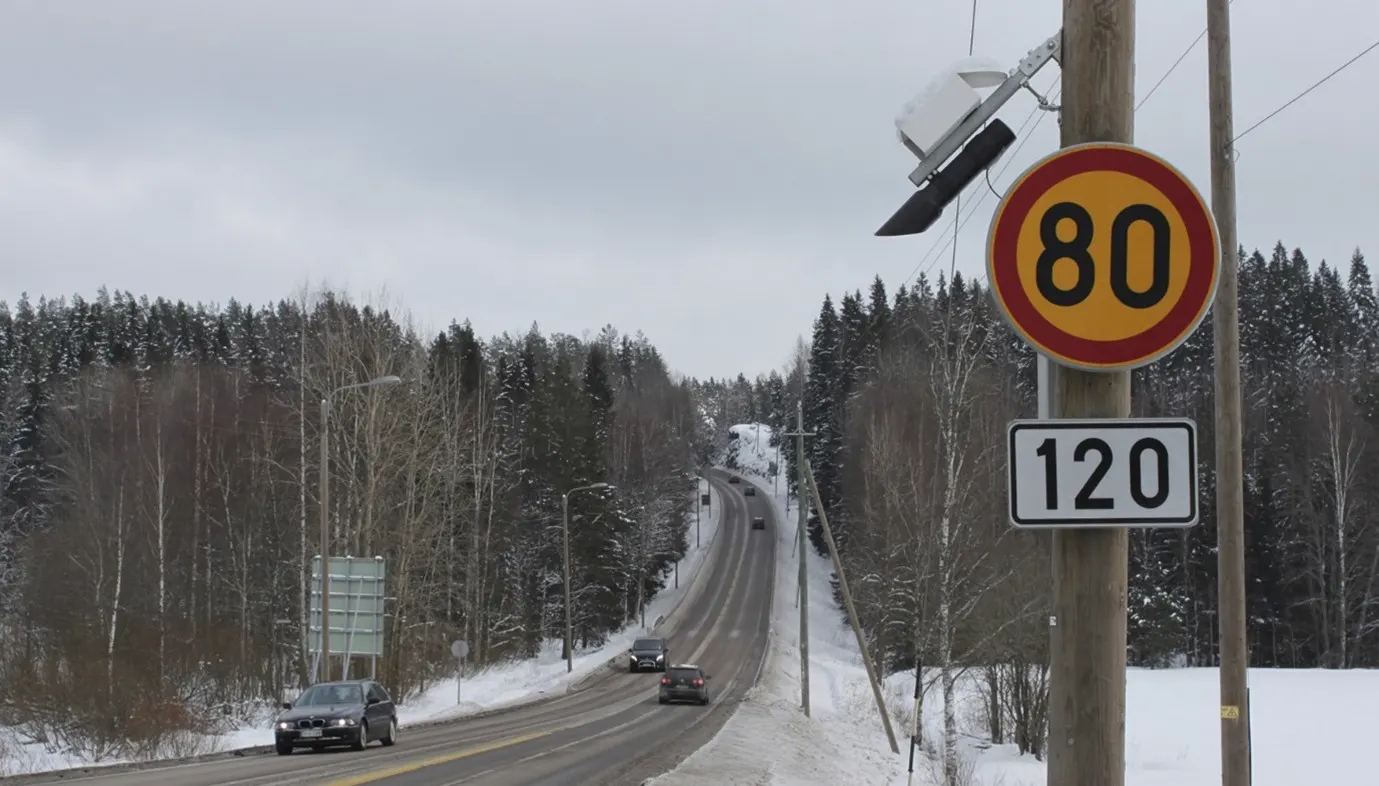
Better forecasting and decision-making
One of the key benefits of continuous monitoring is the ability to detect rapidly changing conditions, such as black ice formation or sudden drops in friction.
Reliable continuous data supports operational decision-making, enables predictive maintenance and improves service level monitoring. Compared to traditional methods, optical solutions are safer and more efficient, as they operate continuously without requiring braking.
Environmental data supports winter maintenance
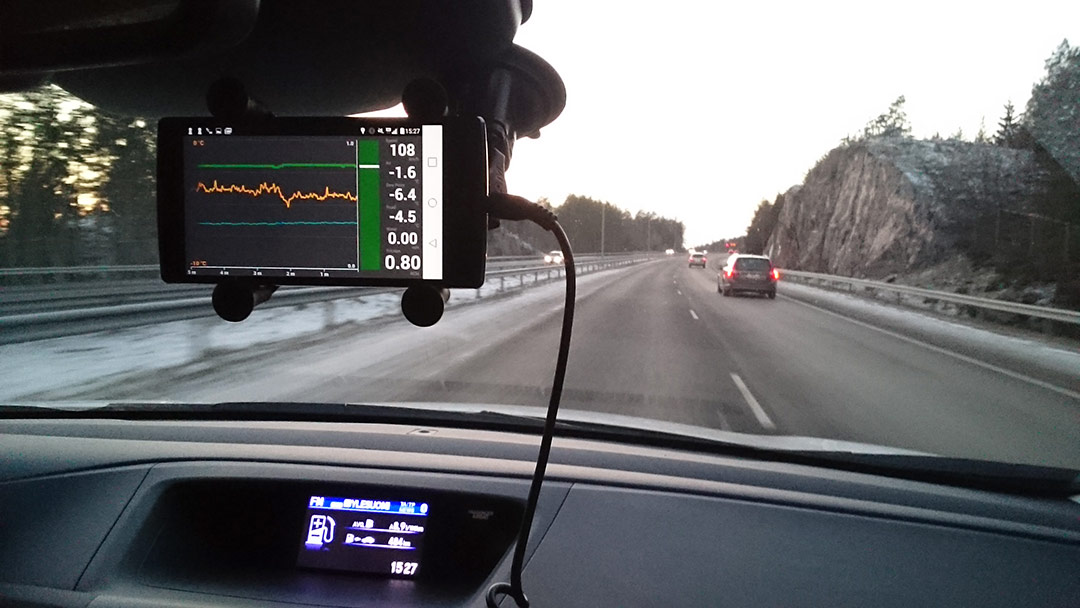
In addition to friction, modern road condition monitoring systems measure several environmental parameters, including: road surface temperature, air temperature, humidity and dew point.
This data is essential for winter maintenance operations. For example, temperature data helps determine whether road salting is effective under current conditions, enabling optimized maintenance actions and reduced chemical usage.
Easy deployment and scalable solution
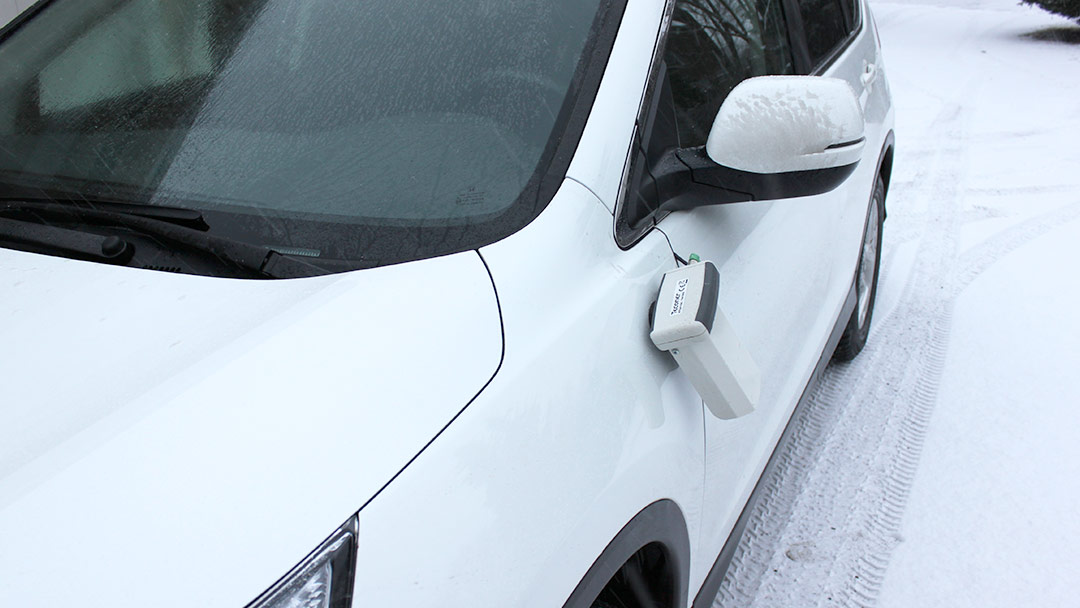
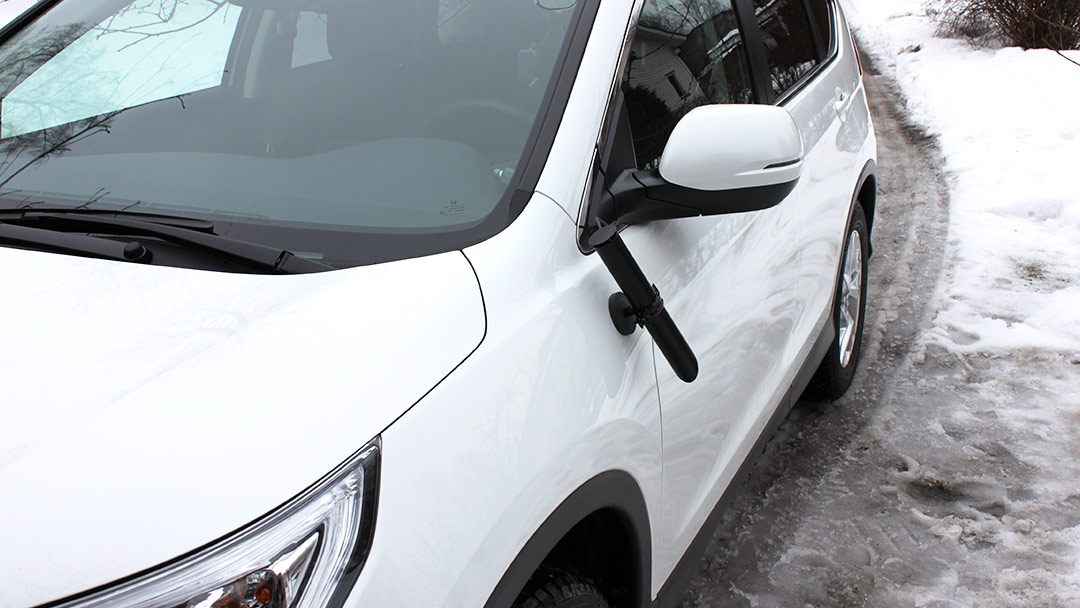
Teconer’s systems are designed for mobile use and can be easily installed on vehicles operating within road networks.
Key benefits:
- compact and robust design
- no moving or wearing parts
- low maintenance requirements
- real-time data transmission
Data can be visualized on map interfaces and integrated into traffic management and maintenance systems.
Wide range of applications
Road condition monitoring systems are widely used in:
- winter road maintenance
- infrastructure quality control
- airport runway monitoring
- intelligent traffic systems
Continuous, high-quality data helps improve safety, optimize resources, and enhance service levels.
A key component of modern infrastructure
Real-time road condition monitoring is no longer just an additional tool—it is a critical component of modern infrastructure management.
Teconer’s solutions combine advanced measurement technology with practical usability, delivering reliable insights in all operating conditions.
Ask for more information about road condition monitoring system systems
Frequently Asked Questions About Road Condition Monitoring Systems
What is a road condition monitoring system?
A road condition monitoring system is a solution that continuously measures and analyzes road surface conditions in real time. It combines sensors, data processing, and communication technologies to provide information about friction, surface state, and environmental conditions.
How does continuous road condition monitoring differ from traditional methods?
Traditional methods rely on individual measurements, often requiring braking or manual inspection. Continuous monitoring systems collect data automatically while driving, providing a complete and real-time picture of road conditions across entire road networks.
What kind of data can be collected with road condition monitoring systems?
Typical data includes:
- road surface condition (dry, wet, icy, snowy, slushy)
- friction levels
- water and ice layer thickness
- road surface temperature
- air temperature and humidity
- dew point
This combination enables a comprehensive understanding of road safety conditions.
Can road condition monitoring systems detect sudden hazards like black ice?
Yes. One of the key advantages of continuous monitoring is the ability to detect rapid changes in road conditions, including black ice and sudden drops in friction, enabling faster response and improved safety.
How is the collected data used in practice?
The data can be used for:
- optimizing winter maintenance operations
- improving traffic management decisions
- supporting road safety analysis
- monitoring service levels across regions
- feeding real-time information into digital platforms and maps
Are road condition monitoring systems suitable for all types of roads?
Yes. Modern systems can be used on highways, urban roads, rural roads, and even in challenging environments such as curves, slopes, and congested traffic conditions.
How are the systems installed and deployed?
Road condition monitoring systems are typically installed on vehicles operating within the road network. Their compact design and lack of moving parts make installation simple and allow scalable deployment across fleets.
How reliable is the measurement data?
Modern optical monitoring systems provide highly consistent and reliable data. Continuous measurement reduces variability compared to single-point measurements and improves overall data quality for analysis and decision-making.
Can the system be integrated with existing traffic or maintenance systems?
Yes. The data can be integrated into traffic management systems, maintenance platforms, and digital services. It can also be visualized on maps and dashboards for real-time monitoring and analysis.
What are the main benefits of using road condition monitoring systems?
Key benefits include:
- improved road safety
- more efficient maintenance operations
- reduced operational costs
- lower environmental impact
- better decision-making based on real-time data
Are these systems used outside road maintenance?
Yes. In addition to road networks, similar monitoring solutions are used in:
- airport runway condition monitoring
- infrastructure quality control
- smart mobility and intelligent transport systems
Why is real-time monitoring becoming essential?
As infrastructure management becomes more data-driven, real-time monitoring enables faster reactions, predictive maintenance, and better resource allocation. It is increasingly a core component of modern, intelligent transport systems.
Related Technologies
Road Weather Monitoring Systems
Learn how road weather stations measure environmental conditions such as temperature, humidity and precipitation to support road safety.
Aggregate Moisture Measurement
Discover how optical sensors measure moisture in aggregates for industrial processes.
Road Condition Monitoring Articles
Read more about road condition monitoring technology, winter maintenance and sensor innovations.